


Go From Administrative Chaos to Excellence in Multi-Location Healthcare
Managed facility services for medical offices are more of a requirement than a luxury. For example, consider this scenario: It’s Tuesday morning, and the facilities manager for a regional network of medtail clinics receives three urgent calls before 9 a.m.
- The HVAC system at the downtown location has failed during an unusually warm spring week
- The fire safety inspection at another clinic reveals expired extinguishers
- A third location reports flickering lights in patient exam rooms
Each issue requires coordinating with a different vendor, navigating varying payment terms, and following up multiple times just to get status updates. Meanwhile, the facilities ‘team’ consists of just two people managing these challenges across the entire footprint.
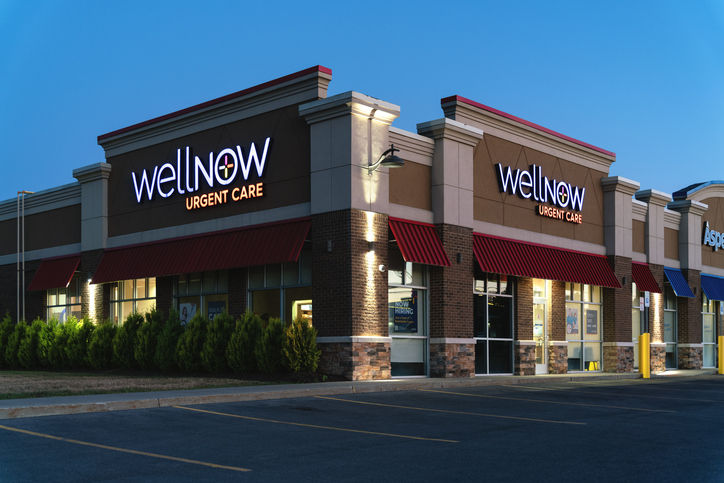
This scenario plays out daily for medical office facility managers, particularly those overseeing the rapidly growing medtail sector, where urgent care clinics, specialty practices, and outpatient facilities operate in retail-style environments. While new medical tenant move-ins to retail spaces have decreased since 2019, certain provider types like physical therapists, chiropractors, and veterinarians continue expanding into retail locations, driven by patient demand for convenient, accessible care.
Managed facility services for medical offices offer a comprehensive solution to persistent operational headaches, including addressing patient comfort, operational continuity, and regulatory compliance. CLS Facility Services has spent more than 50 years helping companies solve these issues, and today, we’re sharing five ways streamlining facility management positively impacts each location.
The Hidden Cost of Vendor Fragmentation
The shift toward managed facility services for medical offices represents more than simple vendor consolidation. It’s a strategic transformation that enables medical practices to focus on patient care rather than building maintenance logistics. Medical practices working with dozens or hundreds of separate vendors face constant coordination challenges — each requiring separate insurance verification, distinct payment terms, and multiple contact points. Communication becomes sporadic and reactive, with facility managers spending more time chasing information than strategically planning.
Managed facility services eliminate this complexity through a unified program covering all critical building systems. For example, one veterinary organization with more than 180 locations across 27 states was able to implement standardized maintenance programs, complete cycles within predictable timeframes, and maintain its facilities team size despite significant growth with CLS. Medical offices face similar challenges but with added complexity from infection control requirements and patient-facing environments where comfort directly impacts satisfaction scores.
Building Visibility Through Comprehensive Asset Management
Building a detailed asset list represents a foundational component of effective managed facility services for medical offices. Many lack complete visibility into their HVAC systems, knowing only that units exist without understanding their age, condition, or projected replacement timing. This knowledge gap creates budgeting uncertainty and increases the likelihood of expensive emergency replacements when equipment fails unexpectedly.
A comprehensive asset management program creates a detailed inventory of every HVAC unit across all locations, documenting specifications, installation dates, service history, and performance trends. This visibility enables proactive capital expenditure planning that distributes replacement costs over time. When facility managers understand which equipment is approaching end-of-life, they can coordinate replacements during optimal timing windows — scheduling installations during off-hours to avoid disrupting patient care while meeting compliance requirements for systems that affect air quality and patient safety.
Staying Current with Healthcare-Specific Innovations
Healthcare environments constantly evolve with new technologies designed to improve patient safety and comfort. Staying current with these developments challenges medical office facility managers, particularly when working with fragmented vendor relationships where each provider focuses narrowly on their service category. Managed facility services providers with healthcare expertise understand emerging trends and proactively recommend solutions that address evolving patient expectations.
Air scrubber technology exemplifies this dynamic. These systems actively remove airborne contaminants, allergens, and pathogens from HVAC systems, creating cleaner indoor air quality that supports infection control efforts. As patients become more aware of airborne disease transmission, medical offices implementing air scrubbers demonstrate commitment to patient safety. This proactive approach extends to other areas as well. Specialized electrical infrastructure for medical equipment requires expertise beyond standard commercial facility knowledge, while LED lighting retrofits must balance energy efficiency with healthcare-specific color rendering requirements.
Preventive Maintenance: The Foundation of Operational Reliability
Preventive maintenance forms the cornerstone of operational reliability in healthcare facilities. Unlike other commercial environments where equipment downtime creates inconvenience, medical offices face serious consequences when building systems fail. An HVAC outage during the summer months can force facilities to cancel appointments, resulting in lost revenue and disrupted care continuity. Emergency repairs always cost more than scheduled maintenance, both in direct service fees and operational impact.
Comprehensive preventive maintenance programs for medical offices must address multiple building systems with healthcare-appropriate protocols. HVAC maintenance requires more frequent filter changes than typical commercial spaces, as air quality directly impacts infection control. Electrical systems supporting critical medical equipment need regular inspection, while fire and life safety systems must undergo rigorous testing. Annual facility management planning coordinates these activities across multiple locations, ensuring appropriate attention while minimizing disruption to clinical operations.
Supporting Sustainability Goals Through Integrated Facility Management
Sustainability increasingly matters to healthcare organizations facing pressure from patients, employees, investors, and regulators to demonstrate environmental responsibility. Medical offices generate significant energy consumption through HVAC systems that run constantly and specialized equipment requiring reliable power. Environmental, social, and governance initiatives have become important considerations for organizations seeking to reduce their environmental footprint while realizing operational cost savings.
Managed facility services providers support these sustainability goals through multiple approaches. LED lighting retrofits significantly reduce energy consumption while improving light quality. Energy management systems provide real-time visibility into consumption patterns, enabling optimization strategies that reduce waste without compromising comfort. Proactive HVAC maintenance ensures systems operate at peak efficiency. The centralized visibility enables organizations to track energy consumption trends across their entire facility portfolio, identifying optimization opportunities and supporting external reporting requirements while scaling successful initiatives across all locations.
Selecting the Right Managed Facility Services Partner
Implementing managed facility services for medical offices requires selecting a partner with the right combination of capabilities. Healthcare facility expertise ensures the provider understands infection control requirements, patient comfort priorities, and regulatory compliance obligations. A nationwide vendor network enables consistent service delivery across all locations, regardless of geographic distribution. Technology platforms that provide real-time visibility into maintenance activities, asset conditions, and spending patterns support informed decision-making. A track record of successful implementations in healthcare environments demonstrates the provider’s ability to deliver promised results.
CLS Facility Services brings more than 50 years of experience to healthcare facility management, with a deep understanding of both traditional medical environments and the emerging medtail sector.