


Explore the Activities That Protect Your Most Critical Building Systems
Preventive commercial HVAC maintenance sounds straightforward in theory. What’s complicated about scheduling regular service to avoid breakdowns? But what actually happens during those maintenance visits? What separates an in-depth preventive maintenance program from a cursory inspection that provides false confidence while missing critical issues?
Understanding the specific activities involved in preventive commercial HVAC maintenance helps facility managers evaluate service providers, set appropriate expectations, and appreciate why systematic maintenance delivers measurable returns. These activities aren’t arbitrary; each addresses specific failure modes, efficiency losses, or performance degradation patterns that research and decades of field experience have identified as critical.
Activities That Maximize Energy Efficiency
Energy consumption represents one of the largest ongoing costs associated with commercial HVAC systems. According to the U.S. Energy Information Administration, HVAC accounts for approximately 40% of energy use in commercial buildings. Preventive commercial HVAC maintenance addresses multiple efficiency factors through systematic attention.
Filter replacement and cleaning represent the most fundamental efficiency maintenance activity. Dirty filters restrict airflow, forcing systems to work harder while delivering less cooling or heating capacity. Depending on the environment, filters may require monthly replacement in high-traffic facilities or quarterly changes in cleaner environments.
Coil cleaning addresses both evaporator coils inside air handlers and condenser coils in outdoor units. Dust, debris, and biological growth on coils act as insulation, preventing efficient heat transfer. Professional cleaning restores heat transfer efficiency, often reducing energy consumption by 10-15% according to ASHRAE research.
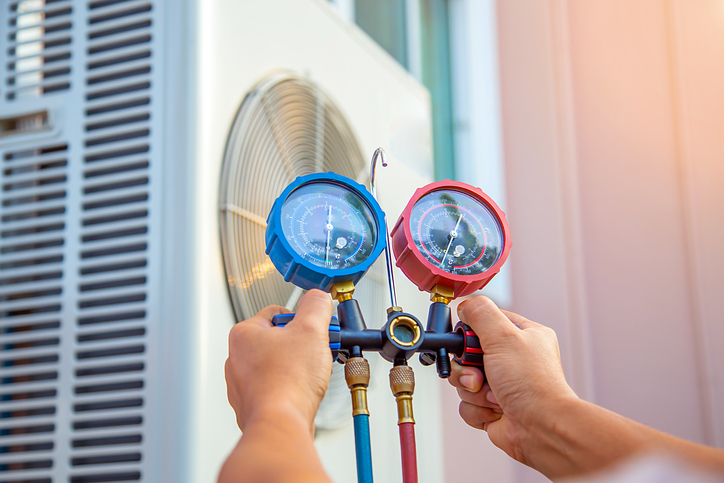
Refrigerant level verification ensures systems maintain manufacturer specifications. Low refrigerant reduces cooling capacity while increasing compressor workload and energy consumption. Technicians check pressures, temperatures, and subcooling to verify proper charge, adding refrigerant when needed and investigating leaks that may indicate deeper problems.
Activities That Extend Equipment Lifespan
HVAC equipment represents substantial capital investments that organizations naturally want to protect. Strategic preventive commercial HVAC maintenance directly impacts equipment longevity by addressing wear patterns before they cause catastrophic failures.
Belt inspection and adjustment prevent unexpected failures while optimizing power transmission efficiency. Technicians check belt tension, alignment, and condition, looking for cracking, fraying, or glazing that indicates approaching failure. Proper tension ensures efficient power transfer without excessive strain that accelerates wear on both belts and bearings.
Electrical connection inspection identifies loose terminals, corrosion, and degraded wiring that create resistance, generate heat, and ultimately lead to component failure. Technicians tighten connections, clean terminals, and measure voltage and amperage to verify systems draw appropriate power. These checks prevent failures that can damage expensive compressors, motors, and control boards.
Lubrication of motors and bearings reduces friction that generates heat and accelerates wear. While many modern components use sealed bearings requiring no maintenance, older equipment still requires periodic lubrication following manufacturer specifications. Moving parts inspection examines dampers, actuators, and mechanical linkages for proper operation, preventing issues before they cause occupant complaints or equipment damage.
Activities That Ensure Safety and Compliance
Commercial HVAC systems involve electrical power, combustible fuels in heating equipment, and refrigerants that require proper handling. Preventive commercial HVAC maintenance includes safety-focused activities that protect occupants, equipment, and organizations from hazards.
Gas pressure and combustion analysis for heating equipment verifies burners operate efficiently without producing dangerous carbon monoxide or other combustion byproducts. Technicians measure gas pressure, check ignition systems, and analyze exhaust gases to ensure proper combustion.
Electrical safety checks measure voltage, verify proper grounding, and inspect safety controls that prevent equipment operation under dangerous conditions. Technicians test high-pressure cutouts, low-pressure switches, and other safety devices to ensure they’ll function properly if needed.
Refrigerant leak detection protects both the environment and system performance. Technicians use electronic leak detectors and visual inspection to identify leaks requiring repair, preventing gradual refrigerant loss that degrades performance. Control system verification ensures that thermostats, sensors, and building automation systems accurately measure conditions and properly command equipment operation. As systems increasingly incorporate sophisticated HVAC control systems, verification becomes critical for maintaining efficient operation.
Activities That Maintain Comfort and Performance
Beyond efficiency and longevity, preventive commercial HVAC maintenance ensures systems deliver consistent comfort that supports productive work environments and positive customer experiences.
Airflow measurement and balancing verify systems deliver airflow to all spaces. Over time, damper positions drift, ductwork develops leaks, and modifications to spaces alter airflow patterns. Technicians measure airflow at key points, adjust dampers, and verify that all zones receive appropriate conditioning.
Thermostat calibration ensures temperature sensors accurately reflect actual conditions and properly control equipment. Drift in sensor calibration can cause overcooling or overheating that wastes energy while frustrating occupants.
Condensate drain maintenance prevents water damage and biological growth. Air conditioning generates condensation that must drain properly to prevent overflow. Technicians clean drain pans, flush drain lines, and verify proper drainage slope to prevent water damage and mold growth that affects indoor air quality.
The Systematic Approach That Delivers Results
These activities don’t exist in isolation or apart from one another. Effective preventive commercial HVAC maintenance coordinates them through systematic scheduling based on equipment type, operating conditions, and manufacturer recommendations. Organizations managing multiple locations benefit from standardized preventive maintenance programs that ensure consistent execution across their entire facility portfolio.
The encompassing nature of preventive maintenance explains why organizations increasingly recognize it as strategic facility management rather than a simple operational expense. As one component of proactive commercial HVAC asset management, preventive maintenance creates the visibility and documentation needed for informed capital planning and replacement decisions.
Partner with Preventive Maintenance Experts
CLS Facility Services has been delivering comprehensive preventive commercial HVAC maintenance for more than 50 years. Our systematic approach ensures all critical activities receive appropriate attention across every location in your facility portfolio.
Connect with us today to learn how our preventive maintenance programs protect your HVAC investment.